One user, one problem
I kept the team focused on Arthur’s problem as decisions came up under time pressure.
Seven people who had just met had three hours to build an AI product. I acted as the team’s product manager and led our debugging, and we presented a working prototype of a delivery tool for small neighborhood pharmacies.
Product manager
Under three hours, from problem to presented prototype
Seven teammates who had just met
Prototype, simulation, marketing and pitch deck
Our persona, Arthur, is a single parent who struggles to get insulin deliveries on time. Small neighborhood pharmacies don’t have the delivery systems that big chains do. A missed handoff can mean a missed dose.
Lifeline Relay is software that helps small pharmacies make faster, more reliable deliveries. It works in four steps.
AI acts as a go-between for the driver and the customer. It messages the customer that the package is on the way, collects replies from the customer and their backups, and tells the driver who will meet them.
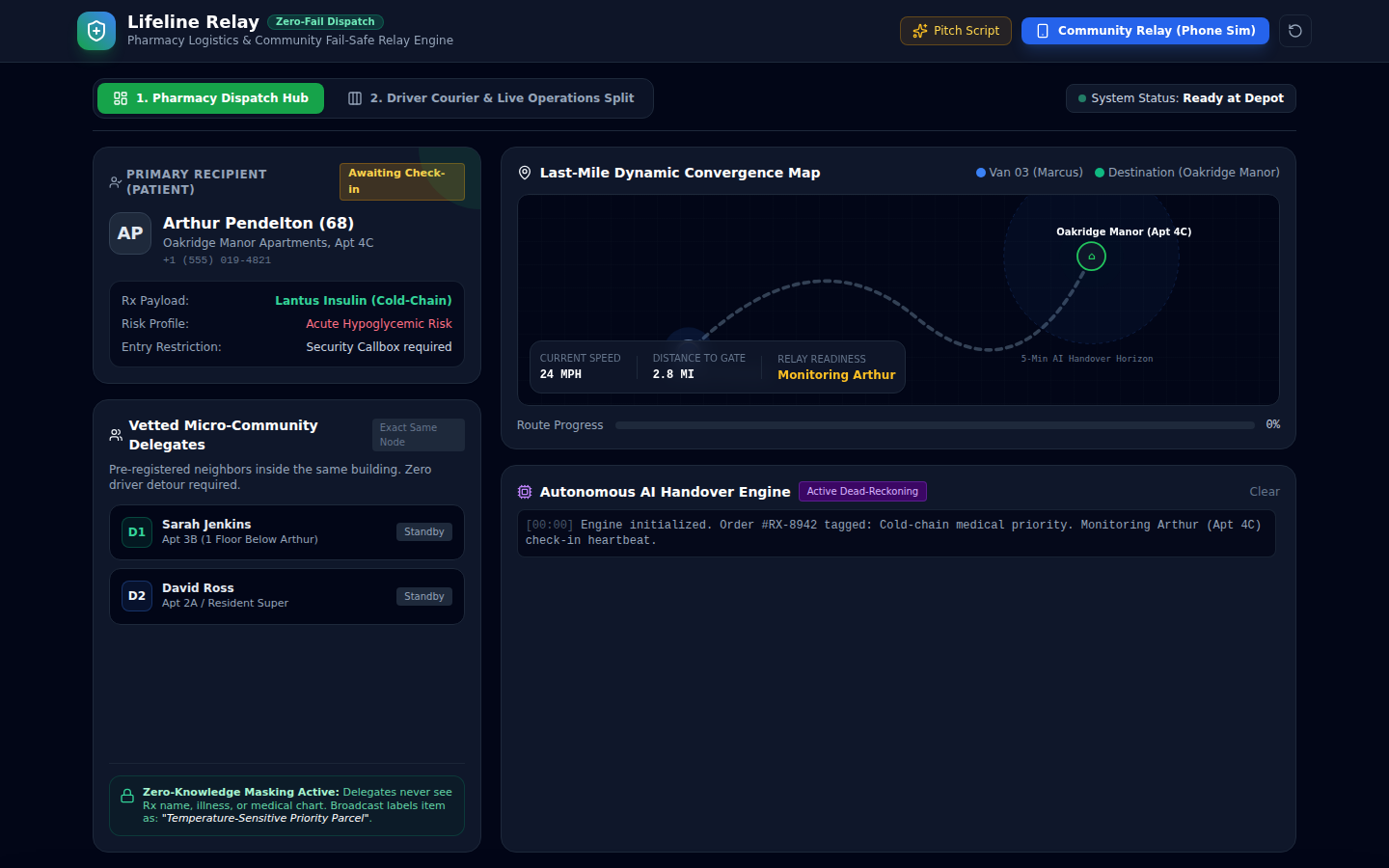
We had seven people and three hours, so my job was to keep everyone aligned on one user and one problem while the work moved in parallel.
I kept the team focused on Arthur’s problem as decisions came up under time pressure.
I used our shared slides to track progress and open issues, so everyone worked from the same list.
I led the team through dogfooding, which means using your own product the way a customer would so you find problems before they do.
I explained to the team why dogfooding mattered. Then I split up the work so everyone had a part.
Personal information stays between the pharmacy and the customer.
The PIN is meant for the customer and their delegates only, so the recipient can confirm the handoff.
Phone and text options support people who are less comfortable with apps and people with hearing or vision needs.
People in rural areas with no nearby delegates can’t use it yet.
The demo is the version we presented. We fixed some of what dogfooding turned up during the build, and planned the rest for the next slice.
The prototype is a simulation built for a laptop screen. The people and addresses in it are made up.
Alison Chai, Ebony Paster, Xantiago Mukai, Mandy Wang, Nobody Flowers, Davion and Garv Patel.
What I learned: Staying aligned and focused under pressure wasn’t a new lesson for me. It was a reminder of how much that role matters when time is short.