The features that closed our renewals
Long-requested teacher features stood between us and signed renewals. I owned discovery, requirements, testing, and launch readiness for them, and the company reached its first 100% net revenue retention year.
Senior Product Manager
2024
Customer success, design, engineering
Subject Technologies, B2B EdTech
Schools leaned in
After we launched the new course SKU, schools leaned in. As schools took a more hands-on role in their courses, they needed tools we hadn’t built yet. Schools that served as teacher of record needed more flexibility, more visibility, and more agency over their own courses. Some of those requests had been on the list for a long time, and now they stood between us and signed renewals.
How we worked
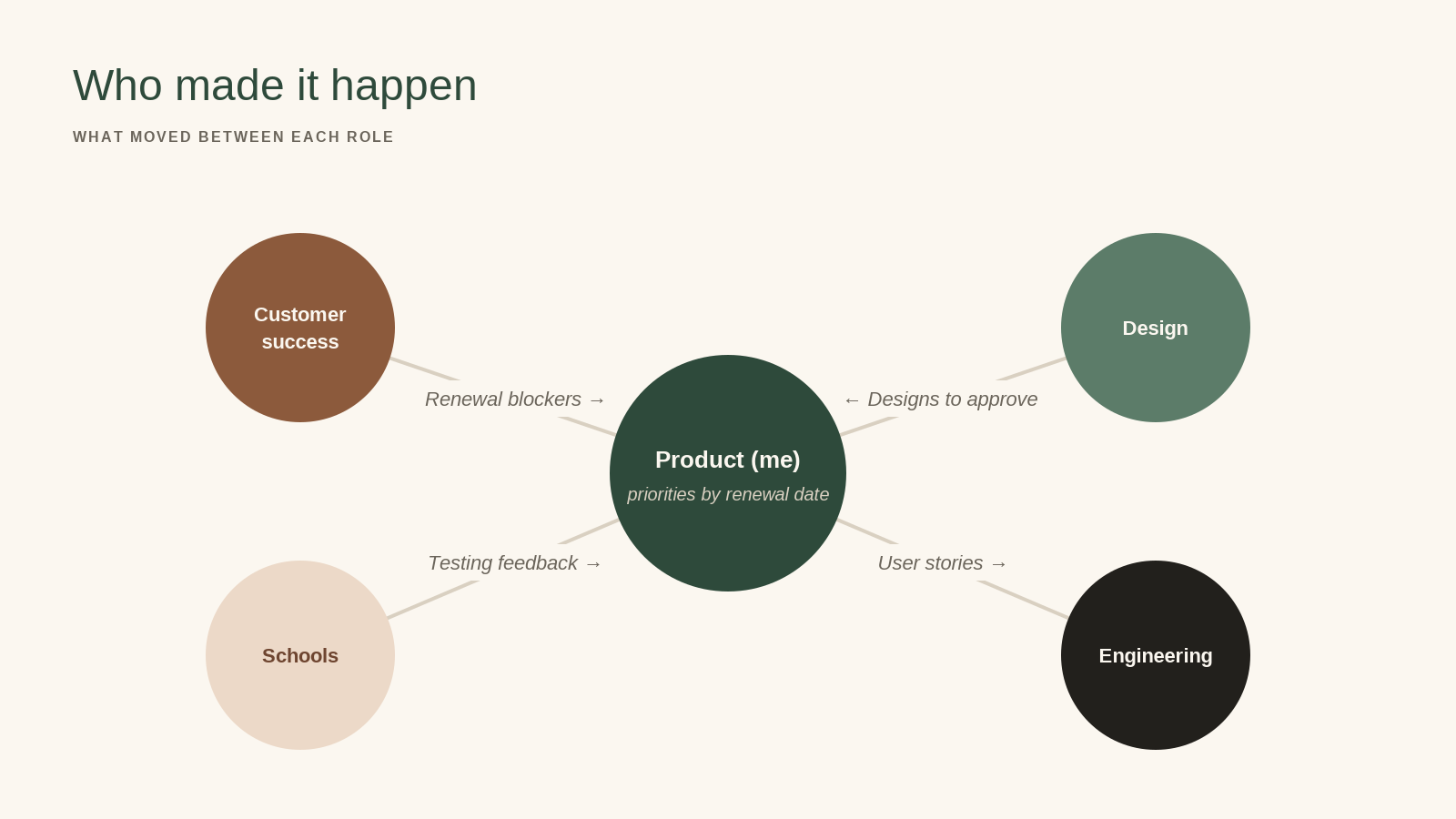
Customer success surfaced the renewal blockers, and I ran discovery with educators through calls and follow-up surveys. We ranked each feature by three dates: when renewals were due, when schools needed to sign, and when the course would see its heaviest use. From there I wrote the requirements and user stories, approved designs before engineering built them, tested finished work, and prepared each launch with feature language, FAQs, and workarounds for any shortcomings. Everything was built and tested months before summer school, so schools could try the features and tell us what to change.
Three themes
Teachers could override grades from our graders. Students could skip topics they had already mastered or didn’t need for their school’s course.
Lesson videos couldn’t be fast-forwarded, so students completed the core lessons.
The minimum-score gate in our 100-course SKU, whose requirements I wrote, became adjustable so each district could set its own bar. A score below a set line on an assignment blocked the student from more lessons.
Put the adults in the room first
Schools also asked for questions built into the videos, and we delayed them. The main blocker to renewal was giving the adults in the room the agency they needed to support their students. My solution was to offer the questions as a second assignment, using features we already had. It did the same job without the same delight.
Keeping schools moving
When a feature wasn’t ready, we found a manual path. Some districts wanted a lower minimum score than the built-in 80, such as 60, so we set it on the back end until the setting existed. We also had teachers approve skips themselves instead of making them automatic. It added a step, but it kept teachers unblocked while we finished the feature.
A gradebook is never just a gradebook
A gradebook looks simple, but it holds many decisions. Did the student see the grade? Who overrode it, and how many times? Can teachers leave comments? What does color mean: mastery, retakes, or a new notification? We made those decisions with teachers, not for them.
I ran the discovery on the options, ranked what mattered most, and worked with the designer to design for more than we first released, so we could add features without redesigning it. When a public district’s teachers saw it, they found a feature they used every day, helped decide what mattered most, and felt heard, trusted, and part of the build.
What changed
These features helped close the renewals that mattered most.
The company’s first 100% net revenue retention year.
A gradebook tested in summer and ready for fall’s grade-level courses.
What I learned:
- Renewal dates make an honest roadmap.
- Customer success is a product team’s early-warning system.
- The simplest-looking feature often holds the most decisions.
I am under a confidentiality agreement with this employer, so I share percentages rather than dollar figures, customer names, or internal detail.